Environnement et écologie Fact-check publié le

✅ La Chine a restauré plus de 12 millions d'hectares de terres désertifiées

✅ Vrai

Le post

China has restored 12 million hectares of desertified lands in just 5 years 🇨🇳🌳🇨🇳🌳🇨🇳🌳 The China Daily reports on something that, gotta hand it to them, I doubt a country other than China could deliver on as rigorously as they have. The 1990s saw the creation of a World Day against Desertification and Drought. At that time, China lost an average of 343,000 hectares of land to desertification. Today, nearly twice that - 666,000 hectares - are now restored every year. In the time between 2021-2025, China has restored over 10 million hectares of desertified land and almost 2 million hectares of rocky-desertification land. “𝙎𝙞𝙣𝙘𝙚 2023, 𝙩𝙝𝙚 𝙘𝙚𝙣𝙩𝙧𝙖𝙡 𝙜𝙤𝙫𝙚𝙧𝙣𝙢𝙚𝙣𝙩 𝙝𝙖𝙨 𝙞𝙣𝙫𝙚𝙨𝙩𝙚𝙙 88.9 𝙗𝙞𝙡𝙡𝙞𝙤𝙣 𝙮𝙪𝙖𝙣 ($13.2 𝙗𝙞𝙡𝙡𝙞𝙤𝙣) 𝙞𝙣 544 𝙠𝙚𝙮 𝙥𝙧𝙤𝙟𝙚𝙘𝙩𝙨, 𝙘𝙤𝙫𝙚𝙧𝙞𝙣𝙜 16.3 𝙢𝙞𝙡𝙡𝙞𝙤𝙣 𝙝𝙚𝙘𝙩𝙖𝙧𝙚𝙨 𝙤𝙛 𝙡𝙖𝙣𝙙, 𝙞𝙩 𝙙𝙞𝙨𝙘𝙡𝙤𝙨𝙚𝙙. 𝘾𝙝𝙞𝙣𝙖 𝙝𝙖𝙨 𝙖𝙙𝙤𝙥𝙩𝙚𝙙 𝙞𝙣𝙣𝙤𝙫𝙖𝙩𝙞𝙫𝙚 𝙖𝙥𝙥𝙧𝙤𝙖𝙘𝙝𝙚𝙨 𝙞𝙣 𝙙𝙚𝙨𝙚𝙧𝙩𝙞𝙛𝙞𝙘𝙖𝙩𝙞𝙤𝙣 𝙘𝙤𝙣𝙩𝙧𝙤𝙡 𝙖𝙨 𝙞𝙩 𝙛𝙤𝙧𝙜𝙚𝙨 𝙖𝙝𝙚𝙖𝙙 𝙬𝙞𝙩𝙝 𝙩𝙝𝙚 𝙥𝙧𝙤𝙜𝙧𝙖𝙢. 𝙁𝙤𝙧 𝙞𝙣𝙨𝙩𝙖𝙣𝙘𝙚, 𝙞𝙩 𝙝𝙖𝙨 𝙞𝙣𝙩𝙚𝙜𝙧𝙖𝙩𝙚𝙙 𝙥𝙝𝙤𝙩𝙤𝙫𝙤𝙡𝙩𝙖𝙞𝙘 𝙥𝙤𝙬𝙚𝙧 𝙜𝙚𝙣𝙚𝙧𝙖𝙩𝙞𝙤𝙣 𝙬𝙞𝙩𝙝 𝙙𝙚𝙨𝙚𝙧𝙩𝙞𝙛𝙞𝙘𝙖𝙩𝙞𝙤𝙣 𝙘𝙤𝙣𝙩𝙧𝙤𝙡 𝙚𝙛𝙛𝙤𝙧𝙩𝙨, 𝙗𝙧𝙞𝙣𝙜𝙞𝙣𝙜 353,300 𝙝𝙚𝙘𝙩𝙖𝙧𝙚𝙨 𝙤𝙛 𝙨𝙖𝙣𝙙𝙮 𝙡𝙖𝙣𝙙 𝙪𝙣𝙙𝙚𝙧 𝙩𝙧𝙚𝙖𝙩𝙢𝙚𝙣𝙩.”
Image du post LinkedIn vérifié

Le fact-check

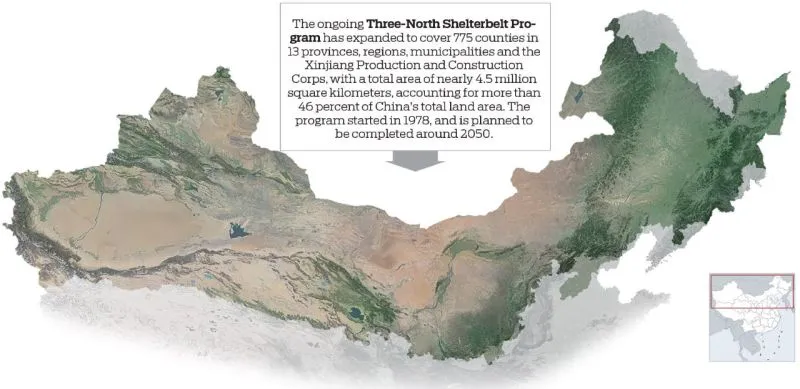
✅ True, it's also known as China’s “Great Green Wall” Project Launched in 1978, the project is officially called the Three-North Shelterbelt Forest Program. Its goal is to slow the expansion of the Gobi and Taklamakan deserts, which threaten northern China’s agricultural regions. The original plan was massive: thousands of kilometers long and tens of billions of trees planted. https://www.rgs.org/schools/resources-for-schools/chinas-great-green-wall It is often said that the project was completed in 2024, but this refers more to a major milestone rather than a true endpoint. In reality, it is an ongoing and evolving program that continues to be adjusted until at least 2050 https://borgenproject.org/green-wall-of-china-combats-poverty/ Results: a partial success Positive outcomes Reduced soil erosion Fewer sandstorms in some regions Improved agricultural conditions Helped reduce rural poverty https://wilderness-society.org/chinas-green-great-wall-a-bold-effort-to-tame-the-deserts/ The image is a tad too green though, a simple look on Google Maps is enough to see that these regions remain arid. https://www.scmp.com/news/china/science/article/3288549/great-wall-taklamakan-china-surrounds-its-largest-desert-giant-green-belt

Historique

5 étapes
17 juil. 2026 • 09:07

Post Reçu

17 juil. 2026 • 11:11

En traitement

17 juil. 2026 • 11:11

Fact-check terminé

17 juil. 2026 • 11:11

Fact-check relu

17 juil. 2026 • 11:13

Publication

✅ True, it's also known as China’s “Great Green Wall” Project Launched in 1978, the project is officially called the Three-North Shelterbelt Forest Program. Its goal is to slow the expansion of the Gobi and Taklamakan deserts, which threaten northern China’s agricultural regions. The original plan was massive: thousands of kilometers long and tens of billions of trees planted. https://www.rgs.org/schools/resources-for-schools/chinas-great-green-wall It is often said that the project was completed in 2024, but this refers more to a major milestone rather than a true endpoint. In reality, it is an ongoing and evolving program that continues to be adjusted until at least 2050 https://borgenproject.org/green-wall-of-china-combats-poverty/ Results: a partial success Positive outcomes Reduced soil erosion Fewer sandstorms in some regions Improved agricultural conditions Helped reduce rural poverty https://wilderness-society.org/chinas-green-great-wall-a-bold-effort-to-tame-the-deserts/ The image is a tad too green though, a simple look on Google Maps is enough to see that these regions remain arid. https://www.scmp.com/news/china/science/article/3288549/great-wall-taklamakan-china-surrounds-its-largest-desert-giant-green-belt

Vous avez une question, une remarque ou une suggestion ? Contactez-nous, nous vous répondrons au plus vite !

Nous contacter

Posez votre question à VeraVera