Environnement et écologie Fact-check publié le 13/08/2025

✅ L'eau de Varsovie est contrôlée par des palourdes
Le post original

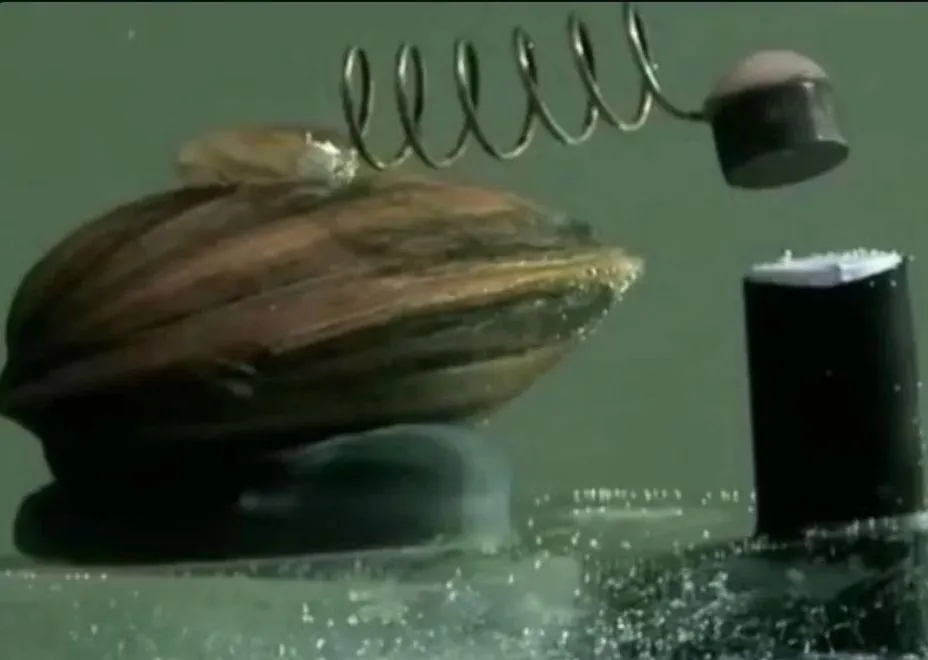
The water quality in Warsaw, the capital city of Poland, is monitored by 8 clams. If the water gets too toxic, they close, and this triggers analyses that can immediately shut off the city's water supply, if at least 4 are close. Apparently, when the clams (‘molluscs’) encounter heavy metals, pesticides or other pollutants, they close their shells, explains Piotr Domek of Adam Mickiewicz University in Poznan, who has worked on the project for three decades. To create a natural early-warning system, Mr Domek and his colleagues collect the clams from rivers or reservoirs, and attach a coil and a magnet to their shells. Computers register whether their shells are open or closed by detecting changes in the magnetic field. There are drawbacks. Clams, as the idiom goes, cannot talk. So they never reveal which toxin is causing them to clam up. Also, it seems that they may be less good at detecting dangerous pharmaceuticals. Still, Piotr Klimaszyk, who leads the team that developed the system, thinks it ought to be used everywhere. It is cheap: all you need is clams and computers. “It allows you to check the water quality hour by hour, minute by minute, so why not?” https://lnkd.in/eWtmZ4rN
Original post image

Le fact-check

✅ True In Varsow, 8 mussels are used as early-warning system, if 6 of them show sustained closure, an alarm notifies operators to conduct further analysis of the water quality. This video shows the installation and explains the principle : https://www.youtube.com/watch?v=i0RkEs3Xwf0 It was also fact-checked here : https://www.snopes.com/fact-check/poland-toxins-mussels-water-supply/ The use of bivalve mollusks as sensors for changes in water quality is not new. The EPOC laboratory at the University of Bordeaux has been conducting such experiments since 2006, using oysters and giant clams in particular. https://molluscanpro.fr/index.php?rubrique=contenu_bio&lang=en Bivalves continuously filter water to feed. By monitoring their behavior, it is possible to immediately detect changes in water quality. This is done by continuously monitoring the gap between their two shells. A sudden change in amplitude or frequency indicates a change in the environment. The principle is clearly detailed here : https://molluscanpro.fr/index.php?rubrique=contenu_sitePro&lang=en

Historique

2 étapes
12 août 2025 • 20:35

Post Reçu

13 août 2025 • 08:22

Publication

✅ True In Varsow, 8 mussels are used as early-warning system, if 6 of them show sustained closure, an alarm notifies operators to conduct further analysis of the water quality. This video shows the installation and explains the principle : https://www.youtube.com/watch?v=i0RkEs3Xwf0 It was also fact-checked here : https://www.snopes.com/fact-check/poland-toxins-mussels-water-supply/ The use of bivalve mollusks as sensors for changes in water quality is not new. The EPOC laboratory at the University of Bordeaux has been conducting such experiments since 2006, using oysters and giant clams in particular. https://molluscanpro.fr/index.php?rubrique=contenu_bio&lang=en Bivalves continuously filter water to feed. By monitoring their behavior, it is possible to immediately detect changes in water quality. This is done by continuously monitoring the gap between their two shells. A sudden change in amplitude or frequency indicates a change in the environment. The principle is clearly detailed here : https://molluscanpro.fr/index.php?rubrique=contenu_sitePro&lang=en

Vous avez une question, une remarque ou une suggestion ? Contactez-nous, nous vous répondrons au plus vite !

Nous contacter

Posez votre question à VeraVera