Environnement et écologie Fact-check publié le

✅ Il y'a plus de forêts en Chine maintenant

✅ Vrai

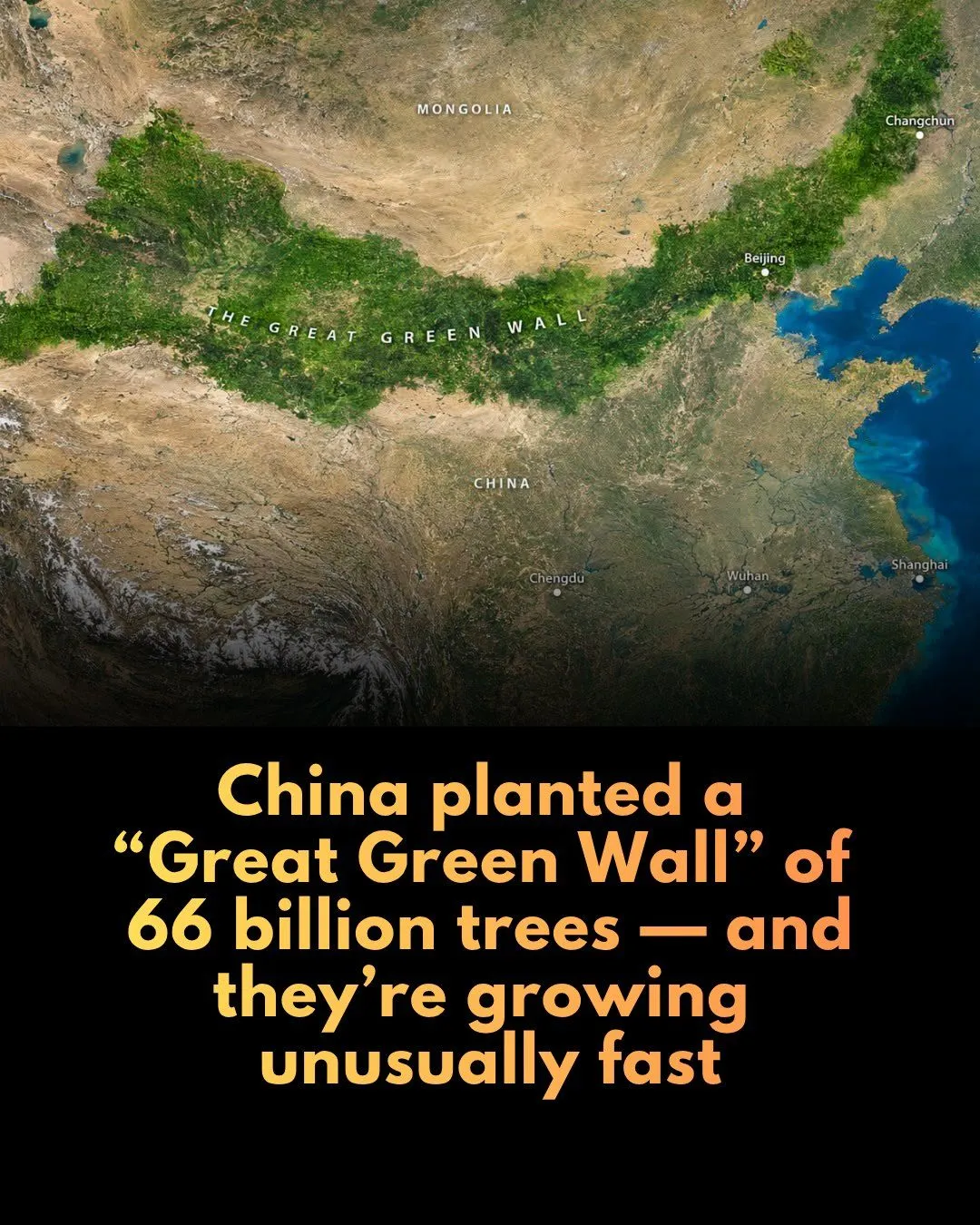
Le post

Nature's Growth Spurt Post credit : Greenonomics. Make sure to follow them for more brilliant insights on the green economy, sustainable finance, climate innovation, and circular economy solutions! Visual Credit: @hashem.alghaili. Head over to their page to support their incredible storytelling through visual. Original Post : _____________ China's planted forests are growing 66% faster than nearby natural forests. At first glance, that sounds like a climate breakthrough. For nearly 50 years, China has been building the world's largest reforestation project — often called the Great Green Wall — planting billions of trees to slow the advance of the Gobi and Taklamakan deserts. Now, new research has revealed something remarkable: These human-planted forests are expanding their leaf area significantly faster than natural forests, even after scientists accounted for differences in age and local growing conditions. The reason? Young forests appear to respond more aggressively to rising atmospheric CO₂ levels, allowing them to absorb carbon at an accelerated rate. But there is an important lesson hidden beneath the headline. This growth advantage doesn't last forever. Researchers found that the acceleration peaks when trees are around 30–40 years old before gradually fading as the forests mature. Natural forests may grow more slowly, but they offer something plantations struggle to replicate: 🌳 Carbon storage that lasts centuries 🦋 Rich biodiversity and wildlife habitats 💧 Stronger ecosystem resilience 🌍 Greater protection against climate extremes The message is clear: Tree planting is one of our most powerful climate tools. But planting new forests cannot replace protecting the ancient forests we already have. The future of climate action isn't a choice between restoration and conservation. It requires both. Because sometimes the fastest-growing solution isn't the one that lasts the longest. __________ ♻️ Found this post useful? Feel free to Like, Comment and Share it with your network to help drive the conversation on sustainability! 👉 Follow Sustainability Infographics 📊 to learn and stay ahead with the industry's best visuals. 📣 Let’s build this community together! Don't hesitate to tag or mention us under any infographics or posts you find relevant, or even send them to us directly. We love discovering new insights through your eyes and sharing the most impactful content with the community. #ClimateAction #Reforestation #NatureBasedSolutions #Biodiversity #Forests #CarbonRemoval #Sustainability #NetZero #Climate #Environment
Image du post LinkedIn vérifié

Le fact-check

✅ Vrai Ce projet pharaonique de Green Great Wall a démarré en 1978. De son vrai nom, The Three-North Shelterbelt Forest Programme, il est censé lutter contre l'extension des déserts de Gobi et du Taklamakan. L'estimation initiale était de 4 500 km de long et 100 milliards d'arbres. https://www.rgs.org/schools/resources-for-schools/chinas-great-green-wall Le programme a été achevé en Novembre 2024. https://borgenproject.org/green-wall-of-china-combats-poverty/ Le projet semble globalement une réussite sur le long terme et pourrait inspirer d'autres projets, notamment au Sahel. Cependant, les plantations à base de peupliers et de saules ne sont pas adaptées aux régions arides. Elles provoquent des consommations d'eau excessives, ont parfois du mal à se développer et impactent la faune et la flore locale. https://wilderness-society.org/chinas-green-great-wall-a-bold-effort-to-tame-the-deserts/

Historique

5 étapes
12 juil. 2026 • 12:22

Post Reçu

13 juil. 2026 • 17:48

En traitement

13 juil. 2026 • 21:47

Fact-check terminé

14 juil. 2026 • 07:50

Fact-check relu

14 juil. 2026 • 08:27

Publication

✅ Vrai Ce projet pharaonique de Green Great Wall a démarré en 1978. De son vrai nom, The Three-North Shelterbelt Forest Programme, il est censé lutter contre l'extension des déserts de Gobi et du Taklamakan. L'estimation initiale était de 4 500 km de long et 100 milliards d'arbres. https://www.rgs.org/schools/resources-for-schools/chinas-great-green-wall Le programme a été achevé en Novembre 2024. https://borgenproject.org/green-wall-of-china-combats-poverty/ Le projet semble globalement une réussite sur le long terme et pourrait inspirer d'autres projets, notamment au Sahel. Cependant, les plantations à base de peupliers et de saules ne sont pas adaptées aux régions arides. Elles provoquent des consommations d'eau excessives, ont parfois du mal à se développer et impactent la faune et la flore locale. https://wilderness-society.org/chinas-green-great-wall-a-bold-effort-to-tame-the-deserts/

Vous avez une question, une remarque ou une suggestion ? Contactez-nous, nous vous répondrons au plus vite !

Nous contacter

Posez votre question à VeraVera