


✅ Des pelures d'oranges ont créé une forêt
Le post original
Le fact-check
Historique
2 étapesPost Reçu
Publication
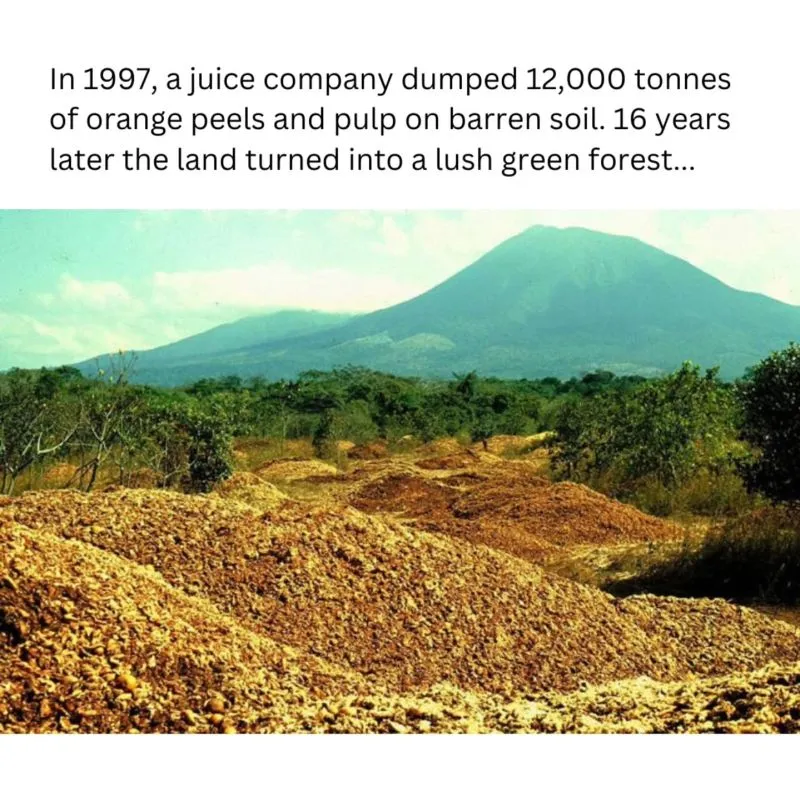
✅ It’s true With us you even get the link to the source cited : https://cvc.li/Wkffz We found slightly different dates associated with this story: 1995 : https://cvc.li/BDYrf 1997, same as here : https://cvc.li/VFytr 1998, according to Scientific American: https://cvc.li/Yupzg There was also a peer-reviewed study published in 2017 on the subject: https://cvc.li/LClZU Here is a summary: The restoration plan for Guanacaste (Costa-Rica) was planned in 1997 by ecologists D. Janzen and W. Hallwachs. They made an agreement with the orange juice company Del Oro: in exchange for donating forested land to the park, the company was allowed to deposit around 1,000 truckloads (12,000 t) of orange waste on degraded pasture within the park. But the rival company TicoFruit sued successfully, arguing that the project had “defiled” a national park. The site was then largely forgotten. 16 years later, researchers from Princeton revisited the area, struggling to locate it at 1st because it had become so overgrown. They found that the former pasture had transformed into dense forest, with 176% more aboveground tree biomass, richer soils, and greater biodiversity compared to nearby untreated land. https://cvc.li/eYBWt
Vous avez une question, une remarque ou une suggestion ? Contactez-nous, nous vous répondrons au plus vite !
Nous contacter